Overview
The Grove is the best-known name for the Manchester Avenue commercial district within the official St. Louis neighborhood of Forest Park Southeast. Buyers are often drawn to The Grove for its central location, strong restaurant and nightlife scene, proximity to major employers, and its direct connection to the broader Central West End and Cortex corridors.
Housing
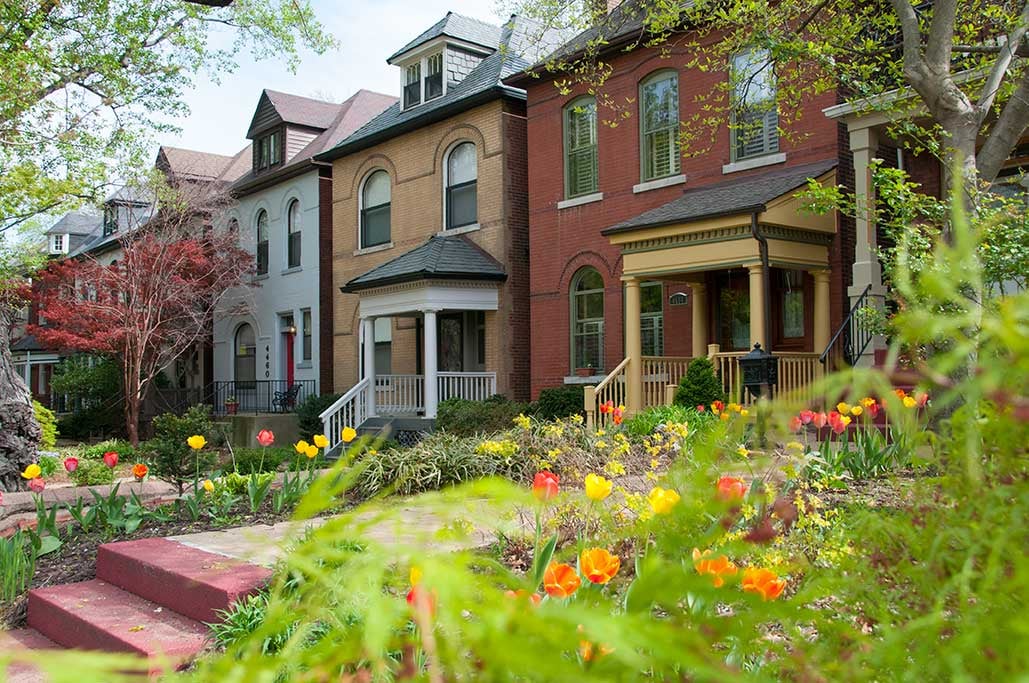
Housing in The Grove includes renovated brick homes, apartments, multi-family buildings, and newer residential options tied to the area’s ongoing redevelopment. The City of St. Louis reports 3,458 residents in Forest Park Southeast, and WUMCRC reports 2,437 housing units with about 70% occupied, reflecting a neighborhood that combines residential density with ongoing reinvestment.
Best For
The Grove is especially attractive for residents, fellows, younger physicians, WashU- and Cortex-connected professionals, and buyers who want a lively city environment with a short commute. It tends to work best for people who prioritize centrality, convenience, and neighborhood energy over larger lots or more traditional suburban quiet.
Good Fit for Residents and Young Physicians
Yes — The Grove is arguably one of the strongest neighborhood fits in St. Louis for residents and young physicians because of how close it is to Barnes-Jewish Hospital, St. Louis Children’s Hospital, Washington University Medical Center, and Cortex. WUMCRC reports that there were more than 66,000 jobs within a one-mile radius of Forest Park Southeast in 2018, with about one-third in health care, which strongly supports the neighborhood’s relevance for medical trainees and early-career physicians.
Hospital Access
The Grove offers some of the best hospital access in the city outside the Central West End itself. Barnes-Jewish Hospital states that its primary hospital locations are on the Washington University Medical Campus in the Central West End, including One Barnes-Jewish Hospital Plaza, 4929 Forest Park Avenue, and nearby specialty buildings, all just north of Forest Park Southeast.
Commute Notes
Because The Grove sits immediately south of the Central West End and along the Forest Park Avenue corridor, it allows quick access to Barnes-Jewish, St. Louis Children’s Hospital, Washington University Medical Center, Cortex, and nearby research and innovation employers. This makes it one of the clearest “live close to work” options for residents and younger physicians in St. Louis.
Schools
As a City of St. Louis neighborhood, buyers in The Grove often evaluate both public and private school options depending on assignment, age of children, and commute priorities. Your linked school pages will be especially helpful here because many Grove buyers are comparing city neighborhoods with inner-ring suburbs and need help understanding school pathways.
Nearby Private Schools
The Grove’s central location also places buyers near a range of private school options in the city and central corridor.
Lifestyle
The Grove stands out for its restaurants, nightlife, walkability, and central-city energy. For buyers who want a more urban lifestyle with quick access to hospitals, research campuses, and the social core of the central corridor, The Grove is one of the most compelling neighborhoods in St. Louis.