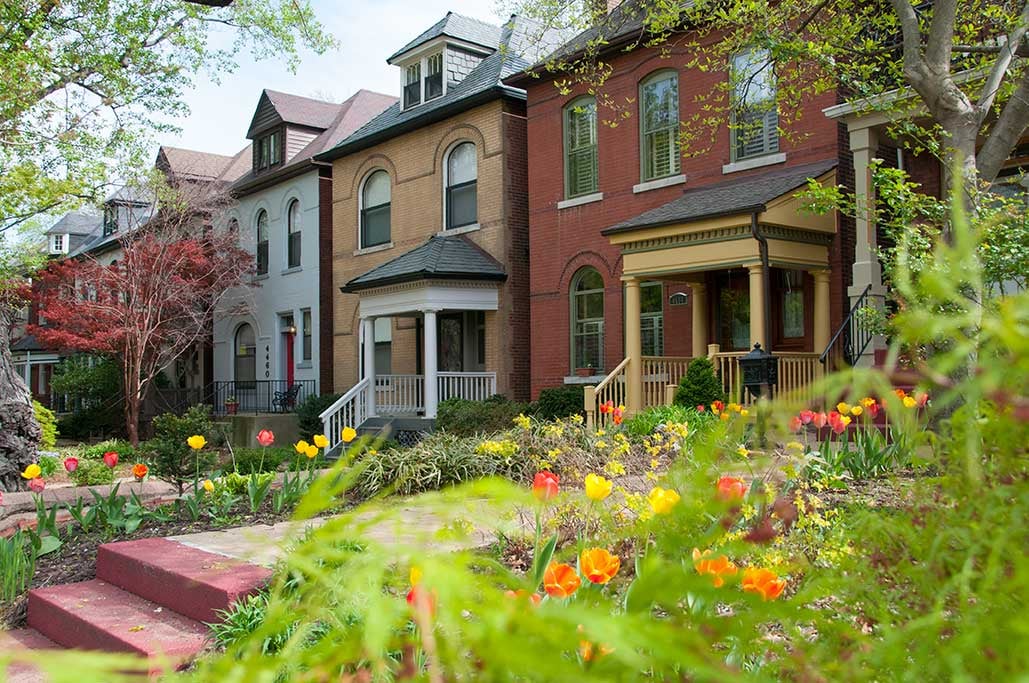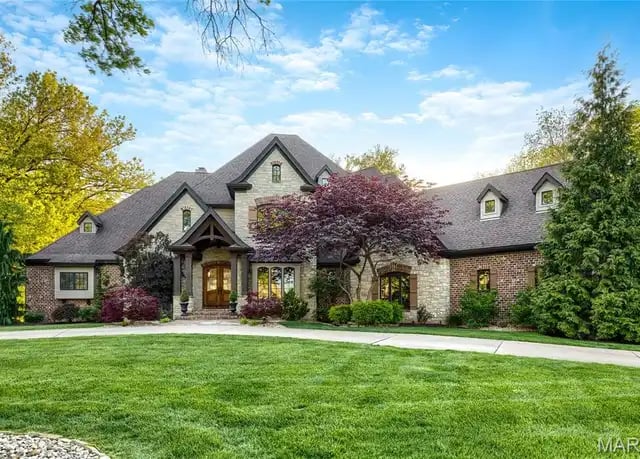
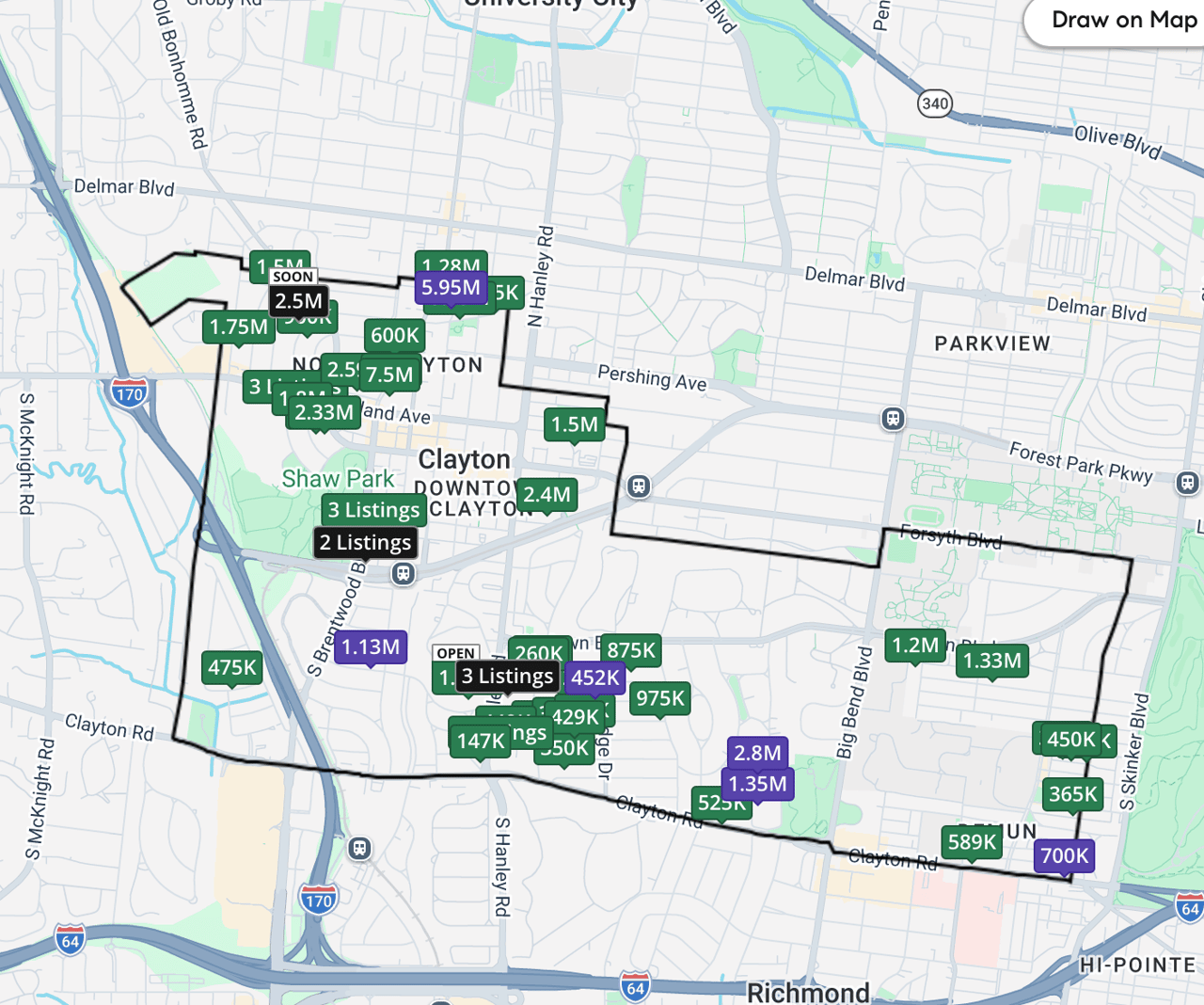
Welcome to St. Louis Children's Hospital
St. Louis Children's Hospital is one of the nation's leading pediatric hospitals and serves as a major referral center for children throughout Missouri, Illinois, and the Midwest. Located in the heart of St. Louis's Central West End neighborhood alongside Washington University School of Medicine and Barnes-Jewish Hospital, St. Louis Children's attracts pediatric specialists, physicians, residents, fellows, nurses, advanced practice providers, researchers, and healthcare professionals from across the country.
Whether you are relocating to St. Louis for residency training, fellowship, a pediatric attending position, nursing leadership, advanced practice provider roles, research opportunities, or healthcare administration, understanding the housing market, neighborhoods, commute times, and local resources can make your transition significantly smoother.
This guide is designed to help you compare communities, understand commute patterns, explore housing options, and determine which St. Louis neighborhood best fits your lifestyle and career goals.
About St. Louis Children's Hospital
St. Louis Children's Hospital is consistently recognized among the nation's top pediatric hospitals and serves patients from across Missouri, Illinois, and the Midwest. As the pediatric teaching hospital for Washington University School of Medicine, the hospital plays a central role in pediatric education, research, and specialized clinical care.
The surrounding medical campus includes:
• St. Louis Children's Hospital
• Barnes-Jewish Hospital
• Washington University School of Medicine
• Siteman Cancer Center
• BJC Healthcare Headquarters
For many healthcare professionals, location becomes one of the most important housing decisions due to call schedules, commute requirements, family considerations, and school district preferences.
Live Near Your Work Program
One of the most unique benefits available to many St. Louis Children's Hospital, Barnes-Jewish Hospital, and Washington University employees is the Live Near Your Work Program.
The program provides qualifying employees with forgivable financial assistance toward the purchase of a home in designated neighborhoods surrounding the medical campus.
Benefits may include:
• Down payment assistance
• Closing cost assistance
• Forgivable loan programs
• Incentives for purchasing within designated neighborhoods
Program eligibility, funding availability, and neighborhood boundaries may change over time. Contact Zoe Taylor for current availability and eligibility.
Visit their website here: Live Near Your Work Program
Most Popular Neighborhoods for St. Louis Children's Hospital Employees
While every relocation is unique, several communities consistently stand out among pediatric physicians, pediatric residents and fellows, nurses, advanced practice providers, researchers, and healthcare professionals relocating to St. Louis Children's Hospital.
Central West End
The Central West End offers the shortest commute and the most walkable lifestyle in St. Louis.
Highlights include:
• Walking distance to St. Louis Children's Hospital
• Restaurants and nightlife
• Luxury condominiums
• Historic architecture
• Forest Park access
Ideal for:
• Residents
• Fellows
• Young attendings
• Healthcare professionals seeking walkability
Clayton
Clayton combines a short commute with luxury housing, excellent schools, and a vibrant business district.
Highlights include:
• 5-10 minute commute to campus
• Luxury homes and condominiums
• Top-rated schools
• Walkable downtown district
Ideal for:
• Attendings
• Physician executives
• Families
Richmond Heights
Richmond Heights offers excellent value, a central location, and quick access to both St. Louis Children's Hospital and downtown Clayton.
Highlights include:
• Convenient commute
• Strong housing inventory
• Shopping and amenities
• Family-friendly neighborhoods
Webster Groves
Webster Groves remains one of the most sought-after communities among physician families.
Highlights include:
• Historic homes
• Strong community feel
• Excellent schools
• Charming downtown district
Typical commute: 15-20 minutes
Kirkwood
Kirkwood is consistently one of the most requested communities among relocating physician families.
Highlights include:
• Highly regarded schools
• Walkable downtown
• Family-oriented atmosphere
• Strong property values
Typical commute: 15-25 minutes
University City
University City provides convenient access to both St. Louis Children's Hospital and Washington University.
Highlights include:
• Historic architecture
• Diverse housing options
• Walkability
• University proximity
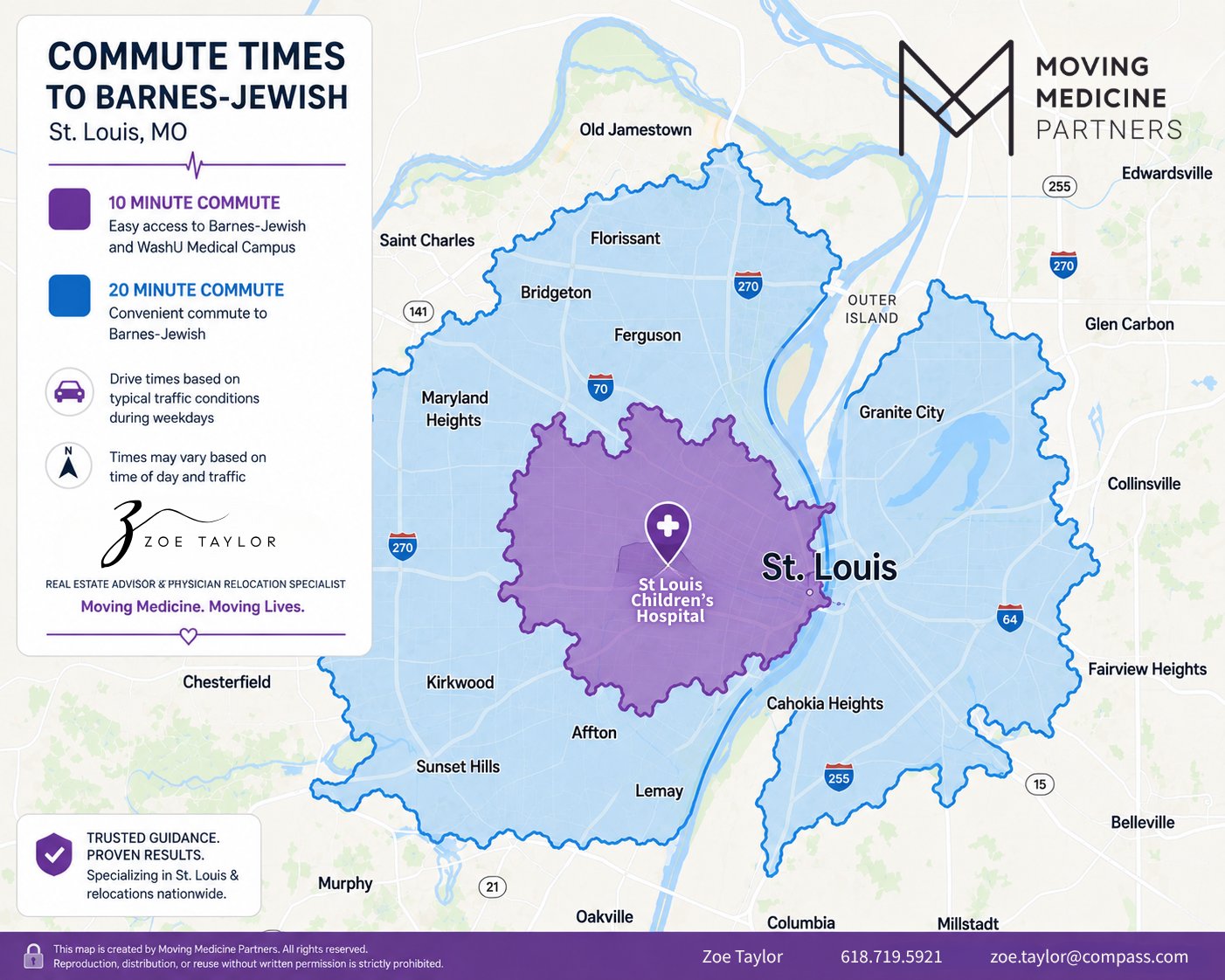
Commute Comparison
Community | Typical Commute |
|---|---|
Central West End | 0-5 minutes |
Clayton | 5-10 minutes |
Richmond Heights | 5-10 minutes |
University City | 10-15 minutes |
Webster Groves | 15-20 minutes |
Kirkwood | 15-25 minutes |
Chesterfield | 20-30 minutes |
Wildwood | 30-40 minutes |
Housing by Career Stage
Pediatric Residents & Fellows
About 1 in 4 WashU residents purchase a home during training. St. Louis is one of the few major academic medical centers where buying can make financial sense for some trainees. Residents in longer programs, dual-income households, and those considering staying in St. Louis after training are much more likely to purchase than residents in short programs or uncertain future locations.
Popular areas include:
• Central West End
• Forest Park Southeast (The Grove)
• Tower Grove South
• Shaw
• Dogtown
• Clayton
• Richmond Heights
• Maplewood
• Shrewsbury
• University City
• Southampton
• Northampton
• Lindenwood Park
Attendings
Unlike residents and fellows who are often balancing physician loan limits and shorter training timelines, attending physicians frequently purchase with a longer-term perspective. Many attending buyers relocating to St. Louis Children's Hospital purchase homes between $500,000 and $1.3 million, though budgets vary significantly based on specialty, dual-income households, student loan repayment strategies, family size, and overall financial goals.
School districts, commute times, lot size, home office space, neighborhood amenities, and long-term appreciation potential often become higher priorities during this stage of a physician's career. Some physicians prioritize walkability and proximity to the medical campus, while others choose larger homes and highly rated school districts in the suburbs, accepting a longer commute in exchange for additional space and lifestyle amenities.
Popular communities include:
• Webster Groves
• Kirkwood
• Clayton
• Chesterfield
• Creve Coeur
• Frontenac
• Ladue
Many St. Louis Children's Hospital attending physicians also explore nearby luxury communities such as Town & Country, Des Peres, and Huntleigh, particularly when seeking larger homes, private lots, or access to some of the region's most sought-after school districts.
Family-Friendly Neighborhoods Near St. Louis Children's Hospital
For many healthcare professionals relocating to St. Louis Children's Hospital, family considerations extend beyond the home itself. School districts, parks, recreational opportunities, walkability, and access to family activities often become major factors in selecting a neighborhood.
Frequently requested communities include:
• Webster Groves
• Kirkwood
• Richmond Heights
• Maplewood
• Clayton
• Creve Coeur
These communities offer strong school options, family-friendly amenities, parks, youth sports programs, and convenient access to the medical campus.
School District & Private School Considerations
For healthcare professionals relocating with children, both public school districts and private school options often play a significant role in determining where to live.
Frequently Requested Public School Districts
• Clayton School District
• Ladue School District
• Kirkwood School District
• Webster Groves School District
• Rockwood School District
Frequently Requested Private Schools
Independent / College Preparatory
• John Burroughs School
• MICDS (Mary Institute & Saint Louis Country Day School)
• Whitfield School
• Forsyth School (Pre-K-6)
Catholic Schools
• St. Joseph's Academy
• Chaminade College Preparatory School
• Visitation Academy
• Villa Duchesne & Oak Hill School
• SLUH (St. Louis University High School)
Other Private Options
• Community School
• Principia School
• Rossman School
Common Questions We Help Families Navigate
• Public versus private school considerations
• District boundaries and attendance zones
• Tuition and application timelines
• School commute considerations relative to hospital locations
• Preschool and daycare availability
• Gifted programs and specialty education options
Physician Loan Resources
Physicians often qualify for financing options unavailable to traditional borrowers, but not all physician mortgage programs are created equal. Differences in student loan treatment, future contract qualification, credit score requirements, PMI waivers, visa considerations, and variable income underwriting can dramatically impact purchasing power. Understanding which lenders excel in specific situations is often just as important as finding the right loan product.
Topics We Help Physician Families Navigate
• Physician mortgage programs and lender selection
• 0% down and low down payment financing options
• 100% financing up to $1.5 million with no PMI (for qualified borrowers)
• Future employment contract qualification
• Residency and fellowship home purchases
• Student loan treatment and debt-to-income calculations
• Moonlighting, locums, bonus, and variable income qualification
• Credit score optimization and lender-specific underwriting guidelines
• International physician visa and citizenship considerations
• Physician loan versus conventional loan comparisons
• Home purchases during attending transitions
• Simultaneous relocation and home sale coordination
How Zoe Taylor Helps Physician Families
Over the years, we've built relationships with physician-focused lenders and have helped medical students, residents, fellows, attending physicians, and international physicians navigate financing scenarios such as:
• Using the higher credit score of two borrowers
• Purchasing on an employment contract before starting work
• Qualifying with moonlighting or locums income
• Navigating H-1B and J-1 visa considerations
• Finding lenders offering 100% financing with no PMI
• Understanding how different lenders evaluate student loan debt
Frequently Asked Questions
Where do St. Louis Children's residents and fellows live?
Most residents and fellows live in the Central West End, The Grove, Tower Grove, University City, Richmond Heights, Dogtown, and Clayton.
Is the Central West End walkable to St. Louis Children's Hospital?
Yes. Many employees walk or bike to campus from the Central West End.
Should I rent or buy during residency?
The answer depends on training length, anticipated career and family plans, and financial goals.
What neighborhoods are most popular with St. Louis Children's attendings?
Webster Groves, Kirkwood, Clayton, Chesterfield, Creve Coeur, Frontenac, Ladue, and Town & Country consistently rank among the most popular choices.
Does St. Louis Children's Hospital qualify for the Live Near Your Work Program?
Many employees of St. Louis Children's Hospital, Barnes-Jewish Hospital, and Washington University may qualify for the Live Near Your Work Program. Eligibility requirements and funding availability can change over time.
How far is St. Louis Children's Hospital from the best school districts?
Many of the region's most requested school districts, including Clayton, Ladue, Webster Groves, Kirkwood, and Rockwood, are located within approximately 10 to 30 minutes of the hospital, depending on traffic conditions.