Overview
Dogtown is one of St. Louis’s most recognizable neighborhood names, and much of the area people mean when they say Dogtown is centered around the official city neighborhood of Clayton-Tamm. Buyers are often drawn to Dogtown for its strong local identity, easy access to Forest Park, central location, and a residential feel that balances city convenience with neighborhood character.stlouis-mo+1
Housing
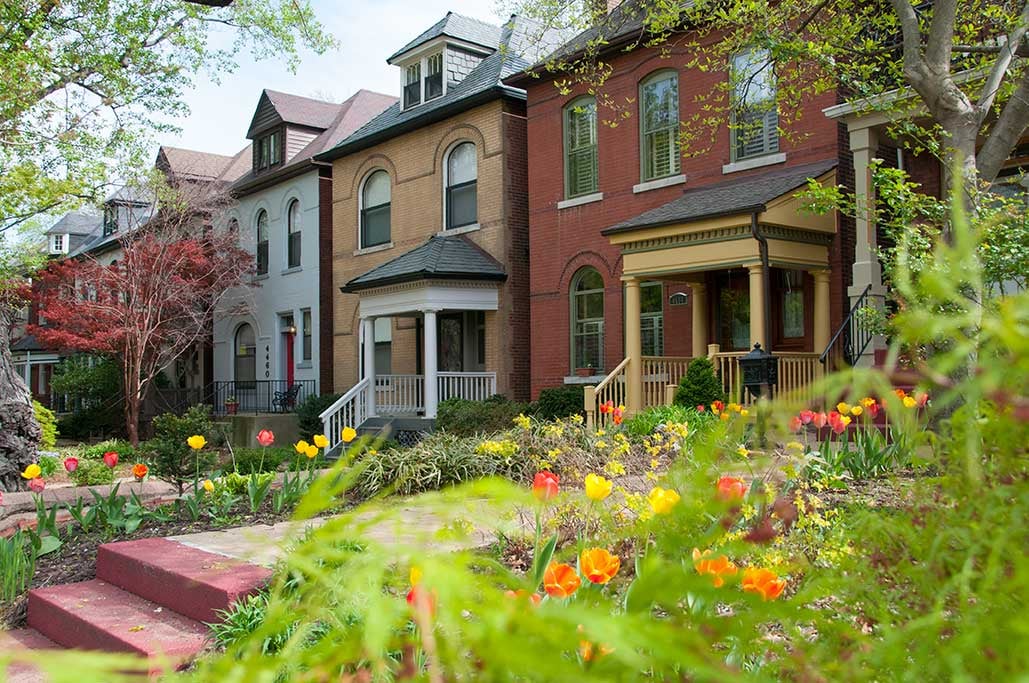
Housing in Dogtown includes classic brick homes, smaller single-family residences, two-family buildings, and other established city housing types. Using Clayton-Tamm as the official neighborhood data source, the City of St. Louis reports 1,541 total housing units and 1,337 occupied housing units, while Niche reports a median home value of $207,059 and median rent of $1,240, supporting Dogtown’s reputation as a relatively approachable close-in option.
Best For
Dogtown is especially attractive for residents, young physicians, first-time move-up buyers, and anyone who wants a strong neighborhood feel close to major institutions and parks. It tends to work well for people who want proximity to the Central West End and Forest Park without paying the premium often associated with Central West End, Clayton, or Ladue.
Good Fit for Residents and Young Physicians
Yes — Dogtown is one of the better fits for residents and younger physicians because it offers relatively central access to Barnes-Jewish Hospital and the Washington University medical corridor, while still feeling more affordable and neighborhood-oriented than several nearby high-cost areas. Its position just south of Forest Park makes it especially appealing for buyers who care about commute, everyday convenience, and housing cost balance.
Hospital Access
Dogtown offers strong access to major central-corridor institutions. Barnes-Jewish Hospital is located on the Washington University Medical Campus in the Central West End, and Dogtown’s location just south of Forest Park places it near Washington University, the Central West End medical district, and other city employment centers.
Commute Notes
Because Dogtown sits near Forest Park and along the western edge of the city, it provides a practical route into the Central West End medical campus and nearby research and academic destinations. That makes it a strong fit for buyers who want short-to-moderate commutes without giving up neighborhood character.
Schools
As a City of St. Louis neighborhood, Dogtown buyers often evaluate both St. Louis Public Schools and nearby private school options depending on assignment, grade level, and educational priorities. Your linked school pages will add value here because many relocating buyers want help understanding how city school options compare across central neighborhoods.
Nearby Private Schools
Dogtown buyers may also consider nearby private school options in the city and central corridor depending on commute, academic goals, and age range.
Lifestyle
Dogtown stands out for its local pride, neighborhood-scale business districts, and immediate access to Forest Park and the broader central corridor. For relocating buyers who want a more relaxed, approachable, and community-oriented alternative to denser urban neighborhoods, Dogtown is one of the easiest city neighborhoods to recommend.